

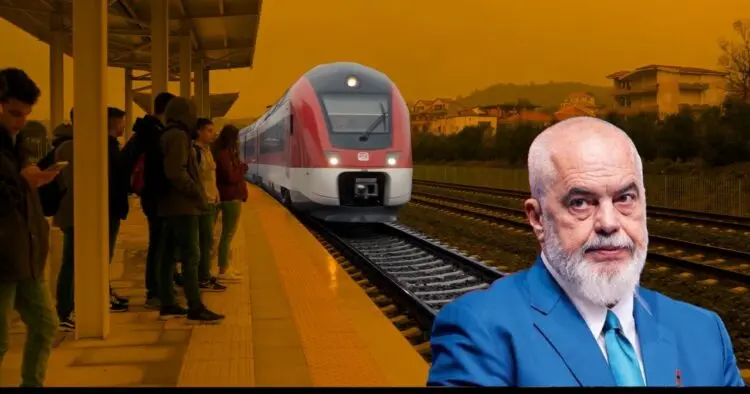
Albania Without Trains but Not Without Tenders: Railway Seeks €1.9 Million for Maintenance
This article was translated automatically from the Albanian original. 🇦🇱 Lexo në shqip
Albania continues to wait for the return of passenger rail transport, while major projects drag on and deadlines are repeatedly postponed. Despite this situation, Hekurudha Shqiptare (Albanian Railways) has opened a tender worth €1.9 million excluding VAT for the purchase of maintenance machinery and equipment, raising questions about the timing and necessity of this investment. Albanian Railways is seeking millions of euros for new equipment, while citizens still do not have a functional rail network for passenger transport. The new procurement procedure, with a limit budget of around €1.9 million excluding VAT, provides for the purchase of specialised machinery and vehicles for the maintenance of railway lines. The list of required equipment includes excavators adapted for railway works, lifting hooks, equipment for tightening and loosening bolts, mechanical jacks, as well as instruments for measuring the temperature and wear of rails. But at a time when the main railway projects in the country are still far from completion, an important question arises: why is such an investment needed precisely now, when the infrastructure that would require maintenance is not yet fully operational? The Tirana-Durrës and Rinas line: the 2023 promise remains unfulfilled One of the projects that most clearly illustrates the delays in rail investments is the Tirana-Durrës line, with the branch towards Rinas airport. The project was promised for completion in 2023, but deadlines have been changed several times. According to the public investment plan, construction of eight stations and stops is expected to be completed by the end of 2027, while electrification of the line is expected to be carried out after 2029. Thus, although the return of trains on this axis has been presented for years as one of the main public transport investments, full completion of the project remains far off. Another strategic investment is the Vorë-Hani i Hotit railway line, which aims to connect Albania with Montenegro. Works on this project are expected to begin during 2027, while completion is planned for 2030. The framework agreement tender: purchases can be made according to needs Another element that draws attention in Albanian Railways’ procurement procedure is the method of procurement. The institution has chosen the framework agreement mechanism, which does not oblige it to immediately buy all the planned equipment. Through this form, the public company can determine the quantity and timing of orders during the implementation period, depending on the needs that arise. However, another issue that requires clarification is that the maintenance of lines still under construction is not the responsibility of Albanian Railways. Until the works are handed over, responsibility for maintenance and defects lies with the private company carrying out the works, in accordance with the terms of the contracts. This makes transparency about the concrete needs that justify the purchase of the equipment, and how it will be used, all the more important. Albanian Railways with a €2.2 million loss, passenger revenue of only €4,500 Beyond delayed projects and new tenders, the financial situation of the public company itself remains a problem. According to the financial statement for 2025, Albanian Railways recorded a loss of around €2.2 million and continues to depend mainly on subsidies from the state budget. The figures for revenue from activity are particularly telling. Throughout 2025, passenger transport generated only €4,500, while around €290,000 was collected from freight transport. In the same period, wages and social insurance costs for employees alone reached about €5.3 million per year. This means that the revenue from passenger and freight transport is far from covering personnel costs, not counting the company’s other operating expenses. Another figure that raises questions concerns staff bonuses. Despite the negative financial results, around €350,000 was distributed as bonuses during 2025. Millions for equipment, while citizens wait for trains The contrast between the state of rail transport and the spending of the public company remains stark. On one hand, the main lines continue to face delays, and the promised projects have not been completed according to their original deadlines. On the other, Albanian Railways continues to seek considerable funds for equipment, while its activity remains loss-making and dependent on public financing. The €1.9 million tender once again brings attention to how investments are planned and justified in a sector that still fails to provide a functional rail service for passengers. What urgently needs explaining is what Albanian Railways is preparing to spend millions of euros on for maintenance, when citizens are still waiting for trains to return to the tracks?